






What is The Radicalisation of Mrs. Mary Lim-Rodrigues about?
We follow the story from the point of view of Mrs. Lim-Rodrigues, a school principal who is excellent at her job and, more importantly, has her heart in the right place. In the narrative sense, the play is about her journey through a life and a system that she believes she has successfully learned to navigate, but that ultimately lets her down in ways she does not foresee.
In a larger sense, I think the play is about how we hold and articulate a loss that feels too big to hold and too painful to express – and, by extension, how we hold each other through something like that.
What inspired you to write this play?
It’s quite tricky to pin down a specific starting point. There are bits of text in here that I actually wrote as early as 2016, and certain aspects of character that I started sketching out just because they were traits that intrigued me, without really knowing how it all fit together.
So there isn’t strictly a single source of inspiration – more a collection of everyday ingredients and moments that I decided to scrutinise out of curiosity, or frustration, or frustrated curiosity.
For instance, the image of pigeons on the street becomes a recurring image in the play, and the idea of living a scripted life – living by a script or by scripture – becomes another recurring theme. Eventually in the world of the play, each of these ideas stops being just about birds or words, and comes to hold a larger, more symbolic meaning.
Tell us about the journey of this play so far.
The journey of this play feels like a coming together of multiple threads, thanks to multiple people. It began with Juliet Chia, who commissioned the first draft under Singapore Repertory Theatre back in 2020, and who has also been the dramaturg for the script from that point right up to now.
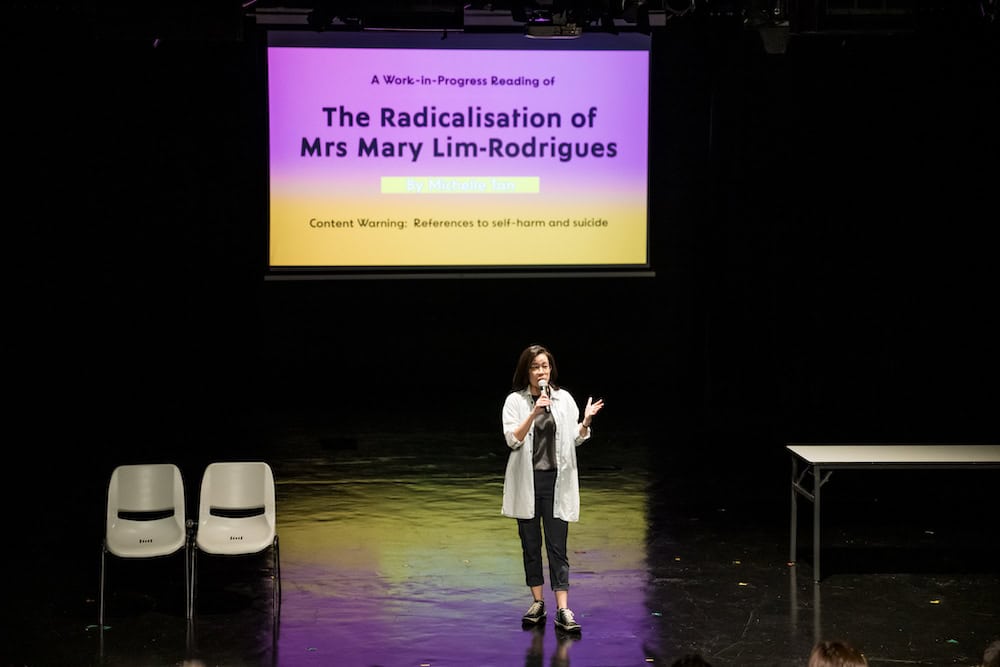
In that window of time, Ellison Tan was pivotal in getting together a very first read of an early version of the script. She was the actor who read it, by herself, to a very small audience, just before Centre 42 invited me to be writer-in-residence. Centre 42 then provided the resources and support to workshop and further develop the play, culminating in a work-in-progress reading at the Singapore International Festival of Arts in 2024.
After that, Joel Tan took the work to Wild Rice for their consideration. Separately, I’d met [director] Edith [Podesta] almost a decade ago, and only subsequently worked with her as a director in 2023, on a very child-friendly show – The Beginning of Anything.
And here we are! The journey of the play has been far from solitary. That’s something I’m very grateful for, and also grateful for the reminder that anything worthwhile takes this amount of time, and this much generosity from other people, to grow.
The play centres on the idea of radical empathy. What is it, and how does it tie into the show’s themes?
One of the big questions the play asks is what it takes to truly put oneself in another person’s shoes, particularly a person who seems different or even incomprehensible to us. In this way, the play tries to show that empathy is, in fact, a radical act. It’s not just a convenient platitude that makes us feel good about doing or saying the right thing. It actually costs us something to express, because real empathy is hard. It should take something out of us. It should require that we set aside a part of ourselves.
In the play, we see how the characters grapple with this – in particular, through how Mrs. Lim-Rodrigues, as the principal, tries to understand Shan, a student who seems so different from her. And with all human relationships, within all kinds of systems or hierarchies that constrain us, there are always large gaps in understanding despite our best intentions.
The play highlights these gaps between two human beings, and tries to reflect this universal reality in a specific context to show that reaching across that gap, or even just being willing to stand inside it, is a necessarily radical act.
Can you tell us more about working with Edith as a director?
There’s something very freeing about working with a director you feel you can trust fully. Edith treats research very importantly, both in her own work and in the shows she’s done that I’ve seen.
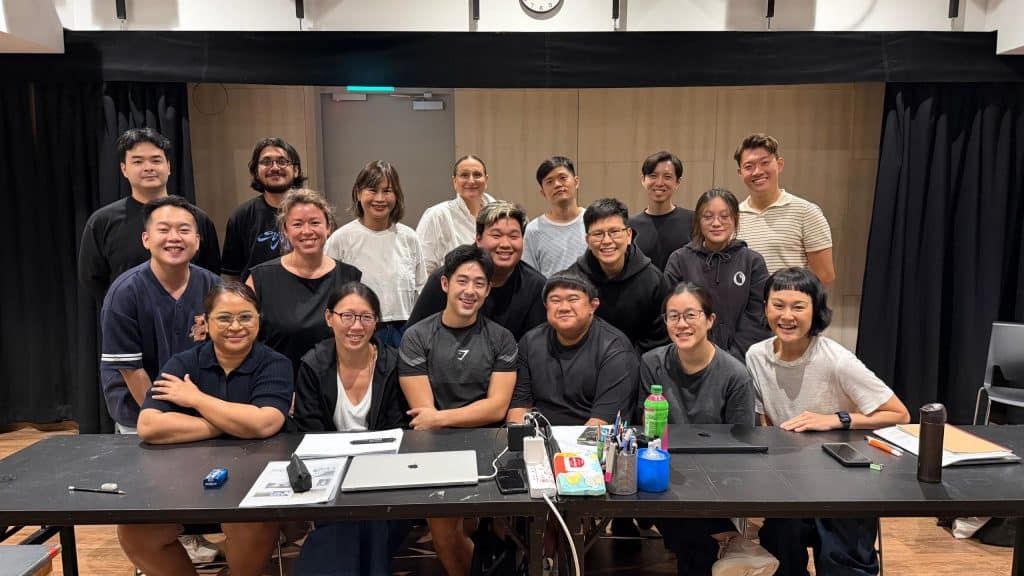
Even at our very first official meeting to talk about the piece, she came prepared with a whole list of questions, and was very systematic in describing how she might approach things. Her willingness and openness to clarify a whole bunch of things with me showed the real priority she placed on understanding my intentions as a writer. I found that very heartening.
The play isn’t conventionally structured. Was that a deliberate choice?
The play was intentionally written in a very open form. It’s not prescriptive. There are minimal stage directions, and everything reads like prose on a page, which understandably results in some people going, “Well, that doesn’t look like a play.”
There are two ways to look at a script like this one: you can be excited by the possibilities, or you can feel that the playwright hasn’t given you enough stage directions or clarity on what they want you to do with it. So it really depends. [laughs]
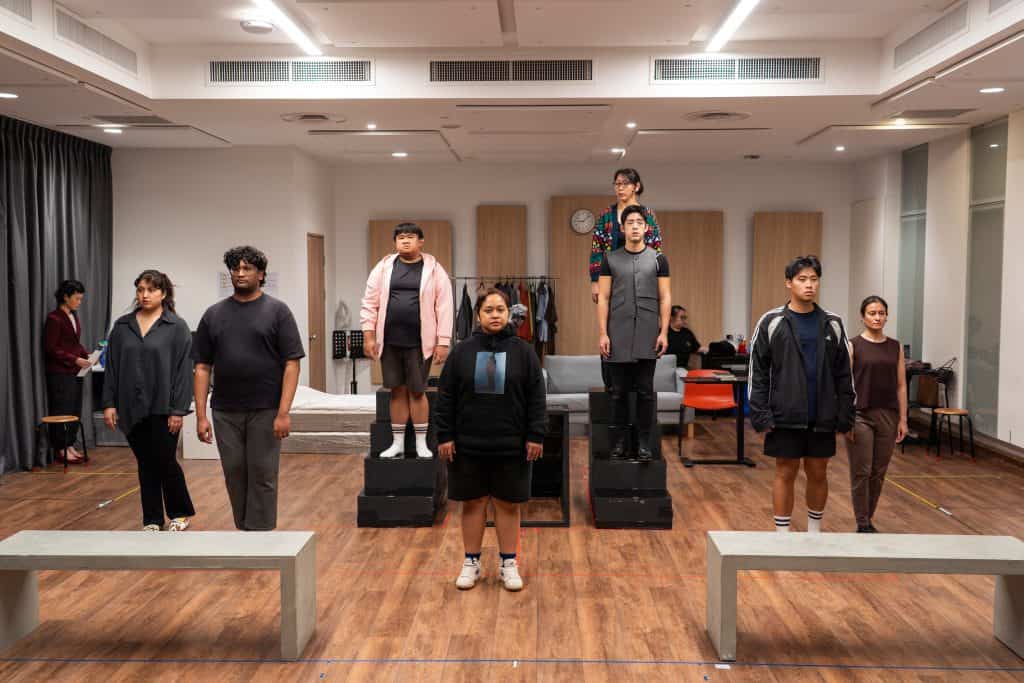
And I’m glad to be giving this play to a director and to a team who are excited by that openness and those possibilities on the page, and for what it could all look like on stage.
What do you hope audiences will take away from the play?
The play opens with two distinct character portraits. When we first encounter them, I think the human instinct in most of us is to immediately assume certain things about each of them.
My hope is that these initial assumptions become undone or, at the very least, interrogated as the story unfolds, so that – by the end – we sit with the discomfort of suspending judgement, and hopefully expand our understanding of another person.
The Radicalisation of Mrs. Mary Lim-Rodrigues runs from 24 September to 10 October 2026. Click here to get your tickets!