








Uncensored Conversations - Ming Poon
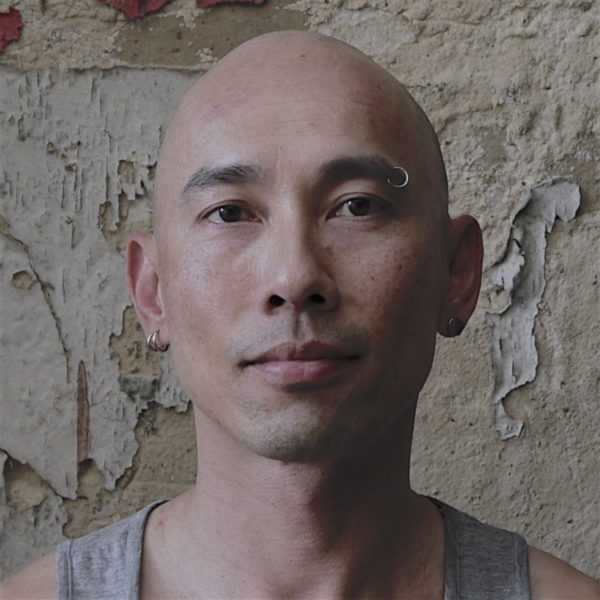
Alfian: Hello Ming Poon. Do you mind starting with a short introduction of yourself and your work?
Ming: My name is Ming Poon, and I’m a choreographer, and I work with applied choreography. That means it’s not just aesthetics on stage; I’m trying to apply the idea of choreography to look at the politics of the body, the politics of movement, and how to disrupt certain kinds of hegemonic power systems, or power dynamics. This is what I normally do. Or ask questions, or deconstruct, or expose, depending on different things. So my work is usually either public intervention, or choreographic intervention, or sometimes encounters. Not so much aesthetics-based kind of choreographic works.
Alfian: So are there any elements of relational aesthetics?
Ming: There is definitely relational aesthetics, a little bit of Theatre of the Oppressed. As a decolonial practice, I also wanted to mention not just Western theories, but also the Buddhistic idea of inter-dependence and care. So in a certain way, it’s relational aesthetics, but I’m actually basing it more on Buddhistic principles, on how the world and people and the universe are correlated, and how we understand relationships through a specific Buddhistic lens. Because I think there are so many other theories that have been in existence before Western theory appeared. Also, as part of my decolonial practice, I just want to make sure anchor myself back into it. Not see everything through a Western lens.
Alfian: I guess I’m also thinking of Indian aesthetic theories involving rasa, and the dichotomy of halus (refined) and kasar (rough) in Malay aesthetics.
Ming: I think we should start building that vocabulary. Especially in Singapore, where we’re sometimes so immersed in Western thought. We’re geared only towards Western theory and aesthetics and the West as a centre of knowledge. This is dangerous sometimes. And we lose our own centre as well.
Alfian: I think we do it because we want to achieve some eligibility under the Western gaze, right?
Ming: Totally.
Alfian: That’s a beautiful description of your practice. When did you start making work in Singapore?
Min: In 2009, when I stopped dancing for companies, I asked the Substation to help provide me with residency. In 2011, I was offered a residency with them under their Associate Artists Research Programme. At that time the artistic director was Noor Effendy Ibrahim. I researched for 2 years and presented the work in.ViSiBLE in 2013. That was the start of a new phase in my career as a choreographer.
Alfian: Right. So, can I ask when you were doing this in Singapore, did you encounter any censorship?
Min: The work was about people with HIV from 2011 to 2013. At that time, nobody came out openly as HIV-positive. Later, more people came out. I remember that we had to submit something to MDA to be vetted and to be given a rating. So we had to send them all the texts and all the recordings and all the interviews. There was also nudity in the piece as well. We had to justify it. How long is the nudity? Is it rear or frontal nudity? So those were first encounters. And we got the approval or the rating like maybe, less than a week before the show? Or something like that.
Alfian: And what was the rating?
Ming: I think it must be R18. I cannot imagine anything else. Because HIV is not viewed as something they want to talk about. I don’t think they were interested in us making an artwork about it, public education aside. They probably preferred there to be some kind of moral messaging packaged into the work that complies with their own agendas.
Alfian: Briefly, can you describe what this work is about?
Ming: It’s about people living with HIV and how they’re unseen in this society. And I wanted to reveal them in this performance through text, through their live voices. The set up was such that everyone was sitting around, surrounded by transcripts of interviews. 122 printed pieces of paper, I remember. And then in the space there were also 16 bulbs. I asked members of the audience to hold the bulbs, so 16 people would hold bulbs. At one point, the lights would go off and it’s all in total darkness. There were four microphones. Every time people read from the transcripts, the lights would flicker, because they were voice-activated.
Alfian: It makes me think of the ACT UP slogan during the 90s AIDS crisis, “Silence=Death”.
Ming: The idea is that the darkness signifies hiding. Fear and shame. But on the other hand, it also signifies the apathy of society. The less you do, the less you see. So it’s the apathy of the society that’s causing the darkness. As you read the stories, with each story, a bulb comes alight; they’re full of love and humanity. So the bulbs flicker, and it’s designed such that they move as well. So if you want to see something, you need to read something. It’s the first work I did with audience collaboration. And I started to understand that this was what I wanted to do.
Alfian: How did you see this as a choreographic work?
Ming: I was dancing in the work. I was moving a lot, but in the dark. So people would speak, and they could see me. I was also undressed. The nudity wasn’t just for effect, it was symbolising what people with HIV would have to go through. Whether it’s nudity during sex, because it’s transmitted through sex. And when you go to the doctor, you undress yourself. And there were two forms of choreography happening. My own body moving as choreography. But also the choreography of the audience’s bodies. You see people moving, holding the bulbs.
Alfian: Was there any kind of friction with the authorities because of the nudity?
Ming: No, because I didn’t need to justify why the nudity was there. I told them basically that it would all be in blackout. Unless the lights bulbs were activated. I guess they were reassured that it was doable.
Alfian: Let’s move to another of your works that dealt with nudity. Undressing Room. I want to rewind to November 22, 2016, when an article called “Pornography Disguised as Art?” appeared on a website called Singapore Affairs. It’s linked to a Facebook account called Singaporeans Defending Marriage and Family. And the publicity for the M1 Fringe had just come out in October or November of that year.
I’d like to read from their description of your work. “Singapore openly homosexual dancer Ming Poon will perform his show in private with anyone where they will disrobe each other in the silent “act” of undressing. The participant can be either a man or a woman and the “act” can last up to an hour, depending on how long he or she wish to be in the room with him.” So, what jumped out of me was this phrase “openly homosexual dancer”.
Ming: I find it interesting that they called me a homosexual, because in the work itself there was no homosexual reference. Nor did I publicly say in the synopsis that I’m a homosexual or queer artist.
Alfian: What’s interesting is that the Facebook group got banned in 2019 by Facebook itself because it was obviously peddling hate. If you look at their articles, it’s just one anti-gay polemic after the other.
I think this article by them is one of those things that sparked off the whole controversy over your work. Because there are people who either read this or are part of that Facebook group and it’s really an echo chamber who become agitated and then take action. They’re often egging on each other and just lathering the outrage. I don’t know whether they wrote letters to the press, but I believe that some of them had sent complaints to the IMDA.
Ming: When I made this work, it’s about nudity. This group links it to homosexuality. This is deliberate because it wasn’t meant to be a homosexual work. But there’s a certain contradiction here—the participant could be a man, could be a woman, it means it could be anyone. So if the participant is of the opposite gender, is it still a homosexual work? The website is pandering to a specific group and there’s a slant they’ve introduced to “taint” the work. Also, my official synopsis is prefaced with this quote: “Death is a stripping away of all that is not you.” By Eckhart Toll. They failed to include that.
Alfian: Let’s compare your write up in the M1 Fringe Programme booklet with the one on their website. Firstly, they removed that quote about death, which links your work to something other than sexuality. Secondly, they editorialised by calling you “openly homosexual”. Thirdly, they took a line from your first paragraph, which said, “It is an invitation to enter into a meditative space where we allow our protections and barriers of our everyday life to be lifted off.” And fourthly, they removed the entire second paragraph. Do you mind reading it?
Ming: “The work touches on themes of desire, shame, power and intimacy. Stripping away is a painful process, but it can also bring about a radically new way of relating to ourselves and to others. When we are stripped of all our worldly appearances and pretences, our humanness may be the only thing that remains.”
Alfian: It seems like they take out anything that doesn’t support their view that the work is pornographic.
Ming: They’ve taken everything out of context. And then they re-imagined the whole work. Even before even the work starts, imagination appears. This is when I realised, the work had already started happening in November 2016.
Alfian: So this is a misrepresentation of the work by those who haven’t seen it. But what if they watch it, and still feel that it’s about sexuality?
Ming: As an artist, if this is their response as a public to the work, I actually don’t mind. When the work is out in the public, people are free to criticise it. Me, I stand by my own write-up. We are very clear in what we do. If you say that it’s pornographic, I’ll say, well… it’s your perception. It’s your experience of it, your imagination of it. It’s valid. But my work is actually this. Please come and look again.
Alfian: Or, have conversations with other people who’ve watched it.
Ming: Yeah. After all, it’s a public work. The problem starts when the state interferes with an artist’s work and starts interpreting it and introduces a lens where it is no longer just this discussion between the artist and the public. Where the state either cancels discussion or frames the discussion—which may not be the correct framing.
Alfian: It’s interesting that you use the word “frame”. On one hand, we use it in artistic discourse to mean how we define a work, how we look at it as an object of analysis. But we also use “frame” as a legal term, which means to produce false evidence so that someone gets into trouble, right? And you are being framed for peddling pornography.
Ming: Actually, in the IMDA’s statement, it wasn’t “pornography”. The term used was “excessive nudity”. So then the clarification has to be asked, what is excessive nudity? Isn’t nudity just nudity?
Alfian: And this was the statement that came with the banning of your work. Did you try to re-submit a work that had…less excessive nudity?
Ming: This was all over the news around December. And I told M1 Fringe people that I should pull my work out from the festival. I said to the festival director, “It should be pulled out because it’s distracting.”
Alfian: To me, your work and Thea Fitz James’ work were the ones most closely associated with the theme of the festival. Which was “Art and Skin”.
Ming: I think it was with pain that the festival director had to drop those two works from their programme. But I also support the decision because it’s taking a lot of attention away from the other works as well, which is not fair. And also, I felt like any further communication with IMDA would not have brought different results. It’ll only add a lot of administrative work on the team. It felt futile to continue fighting.
Alfian: I earlier mentioned four things that the website did to misrepresent the work. But there’s a fifth one. In the M1 Fringe programme, the photo you used is of you pulling off a T-shirt. We can see your bared torso, but your face is hidden by the T-shirt. You’re also wearing long trousers, with a belt. On the website, they’re replaced the image with one of you wearing briefs, with your back to us.
Ming: They got that photo from an article on a gay website where I was interviewed about in.ViSiBLE . They wanted to sexualise the body.
Alfian: I feel such a deep sense of injustice right now. Because we as artists are always accused of being provocateurs or trying to provoke society. But this is exactly what they’re doing. And they’re not being called out for that. They know exactly what the triggers are and how to whip up outrage among their readers. It’s very calculated malicious framing. I’m wondering whether you ever tried reaching out to them.
Ming: I did. I even invited the group to come, I sent messages to them through their Facebook. I said, “If you want to come, I’ll open two more sessions for you. Please come. Then you will experience it for yourself.” No judgment, I wasn’t trying to trick them. I really wanted them to experience the work.
Alfian: I admire the fact that you’re being so generous. Because there could have been bad faith actors. Whose motivation is to find fault with the performance, to claim offence, to misrepresent about it on social media or to even make a police report.
Ming: But then I say, at least we are in contact. We are not separated. We are not talking in silos. As an artist, my interest is in coming to you, that we meet at a common point and then we can discuss. Unfortunately, the state is creating silos as well. They don’t tell you who are making complaints, who are the ones opposed to your work. They don’t try to connect these two parties. If they say art is for communication, then why are they preventing this communication from happening? In the end, we can never get into dialogue, we never become challenged, we never become stronger.
Alfian: Because the state wants to be the final arbiter.
Ming: This is the problem. I don’t mind regulation. If you want me to conduct an artist’s talk? To explain the work. I would have done it happily. If you wanted me to talk to these people who objected. Private closed-door talk, I also don’t mind.
Alfian: I do feel though that there are certain groups of people who, unfortunately, don’t want to engage because they know that they are incapable of debate. I’m not saying this in a patronising way. But they’re aware that they can’t have absolute control over how to recontextualize and reframe you. A lot of their polemics will not be able to survive in a space of debate.
Ming: I think it’s not just about their concerns over winning a debate. The world that they’ve created is very homogenous. I think having to engage creates cracks in their world, and it’s something very uncomfortable for them.
Alfian: It’s insular, right? And they’re just happy to be in this cocoon of confirmation biases. The security of the cocoon is maintained by ignoring other viewpoints and counter-narratives.
Ming: Art, for me, is to disturb the comfortable. And this is where we learn. Can we hold two different concepts together? Can two different concepts sometimes co-exist? It doesn’t have to be one or the other. It can be both. You can practice your religion, I have my religion—at some points we’ll diverge but we can co-exist. When we don’t do that, there will always be polarisation, there will always be a contest between special interests. Instead of saying, our interest is in coexistence. And this is what the state is not doing. They keep saying they want harmony, but for me it’s an empty word. Because the state is not doing its job.
Alfian: I think the idea of harmony, in Singapore, is not so much about making beautiful music together. It’s more about silencing.
Ming: Silencing the things that could have made us gain most insight into society.
Anyway, I’d like us to go back to that phrase, “excessive nudity”. I’m still figuring out what it means.
Ming: How much can you tear off, right?
Alfian: Do you have to peel off your skin?
Ming: It comes back to how we they use language. Language can open up, but it can also close you down, shut down conversation. So when it’s and unclear term like this, it nudges the majority of the population, to think, “Yeah, this work should be shut down. Because it’s excessive.” They don’t question what it means.
Alfian: I don’t know how IMDA gets away with these vague justifications. If I were them, I’d come up with some boilerplate excuse. Something like, “We don’t really have problems with nudity, but it’s the potential contact between performer and participant that that we have a problem with. It might lead to harassment or assault, etc.”
Ming: Later, I asked for clarification of this “excessive nudity”. They explained that the duration of nudity must be within a certain frame. Like maybe 10 or 12 minutes. But this isn’t a figure that’s clearly stated on their website. Whether the contact was a problem as well, it’s also not stated beforehand. None of this is transparent, that’s what I’m saying. So I can’t be sure if this thing about “excessive nudity” was an already established condition or whether it was only retroactively added on? I don’t know. I can’t tell.
Alfian: Can I comment about this excessive nudity thing? I feel like, if someone is naked for say, 30 seconds, and then after that covers up, I can imagine being titillated, even aroused. But if someone is naked for half an hour, there comes a point where you just get used to it and it’s no longer titillating. There’s this neurological process called sensory adaptation, where you experience a reduction in sensitivity to something after prolonged exposure.
Ming: Also, there was no recording of the work for IMDA to look at. This was a premiere. They don’t know what it looks like. So there’s a lot of imagination happening. The pornography part, the danger of two bodies meeting. The light in the room was actually very bright. It’s a white room with all these harsh fluorescent lights. In the space, there were windows being plastered with paper. So nobody can see through. When you look at skin, you see all the pimples, the wrinkles…
Alfian: …and the broken blood vessels.
Ming: And the goosebumps, because it’s an air con room, and your penis is a bit smaller, because it’s cold. It was all in plain light. Literally. Not a warm, romantic, candlelit atmosphere. If there’s arousal, you’ll probably be aroused for a few seconds. Because to be honest, human reactions are biological reactions. Sometimes you can be aroused for no particular reason. You wake up in the morning, you’re aroused. Is it pornographic? Each body reacts differently. Our body, it’s something that has its own knowledge. It can find pleasure in moments which other people don’t think is pleasurable. You might think that someone says this is pain, but someone thinks this is pleasure. But we must respect the body’s reaction to the environment and be transparent with it as well. Not to be ashamed, to denounce. “It’s an arousal, oh my God, I’m having a pornographic thought.” Well, it’s just an arousal, darling. And your body can react in certain ways even when mentally, you’re not aroused.
And Undressing Room is about this. Letting go of pretending that you are not sexual or that you know your body. Sometimes you walk into a room, and you might feel aroused, because the temperature is comfortable. There are moments when you feel embarrassed by a sudden, unexplained arousal on the bus. It happens, but it doesn’t matter. Don’t blame yourself. It’s just your body. How do you strip that away and say it’s okay? How can you learn not to be nervous about it, not to think of it as pornographic?
Alfian: Are you familiar with the work of Adrian Howells?
Ming: Yes, of course. He does one-to-one performances, right?
Alfian: What he calls “accelerated intimacy.” I thought there are links to your own work.
Ming: His works dwell more on the idea of care and intimacy. I want to also deal with fear. And an intimacy that confronts boundaries. And Undressing Room is ultimately about death. It’s about mortality. Because at the end, when we die, we’re all naked when we meet our makers. Would you be ashamed in your undressed state? When you’re stripped of everything?
Alfian: This reminds me that because when Muslims die, there is this ritual where you bathe the body. And it’s not just undertaken by professional body-washers. The family members have to participate in this. Male relatives for a male body, and females for female. You are forced to confront the nakedness of this person who was very close and very dear to you. And you see the folds of the flesh, the grey pubic hairs. You bathe the person tenderly, as if the body was still capable of sensation. And I appreciate this ritual because you can’t shy away from it.
Ming: As a work about dying, Undressing Room is about confronting our ego, mortality, our desires, our fears, our masks, and breaking them down. It takes a lot of courage to face nudity, to undress themselves, and to see me, this stranger, in this stark nakedness. And to say it’s okay.
Alfian: To the fragility of the body. And its imperfections.
Ming: We will all be dying. We are all in the process of decomposing. And it’s okay. And decomposing doesn’t mean you’re not capable of arousal. There can be arousal. There’s not just one way of portraying dying. The body reacts the way it reacts. If it’s dying, it has a certain reaction, it has its own mechanism. It’s not up to you to control it. And then we should let go and let it be itself. We just have to observe it.
Alfian: I think we live in a society where the body is often only valued as a productive unit of labour or a reproductive unit of population replacement. All these things you mention—arousal, decay—fall outside of this economic regime of the body.
Ming: The state does not work with the real body. They work with what is called an abstracted political body. The state is tries to create an idealised, nationalistic, purified form of the body. But this is not a human form. It’s not a coincidence that Singapore prides itself as being one of the least corrupt countries in the world.
Alfian: Well, that’s based on how corruption is defined in those rankings. Their focus is on economic corruption, such as bribery and embezzlement. But I contend that there are forms of political corruption, such as the weaponising of laws and state resources to “fix” their opposition and their critics.
Ming: My point is this political body is pure and incorruptible. But if it’s not corruptible then you don’t understand the body. The body is unpredictable. Sometimes it’s contagious. And Singapore works at the other end, with a conception of a body that’s controlled, that’s predictable. That’s capable of endless growth. It must be consumable, it must be sellable, it must be hard working. It’s a capitalistic body.
Alfian: So now let’s look at the ban for Undressing Room.
Ming: They didn’t call it a ban. In the world of the IMDA, it’s “Not Allowed for All Ratings”. They didn’t give you a direct ban.
Alfian: I feel that’s semantics though, that they don’t want to use the word “ban”. But it’s a ban. The IMDA bans stuff.
Ming: So it’s all semantics, right? “Excessive Nudity”. “Not Allowed For All Ratings”. All these words are being used very strategically, and the IMDA creates a narrative that puts them in a good light. We call it ban, but they call it something else. We live in double consciousness. One consciousness is, we are giving a rating. The other consciousness is, it’s banned.
Alfian: Despite the ban, you still found a way to do this work. Could you walk us through that process?
Ming: Firstly, I feel it’s important not to have this self-fulfilling prophecy. If you say it’s pornography, and then you ban the work, I can’t do the work to prove you wrong. So I have to do it. Demonstrate that it isn’t pornography. Secondly, it’s part of my practice to resist systems of oppression. I should set an example for other people. If I give in then everyone will say, “Oh, this stuff happens.”
Alfian: You just roll over and accept the situation.
Ming: Exactly. Other artists will do whatever they need to do. I have certain privileges, I must be honest, which allows me not to give in.
Alfian: Did you always have a Plan B for this work?
Ming: Yes. Right from the beginning of the application, when I was applying. Because I know Singapore’s mode of operation. In fact, I was surprised that the announcement of the ban came so late. I was expecting it much earlier.
Alfian: So what was this Plan B?
Ming: I decided to continue doing the work. I told the festival to pull it out of the programme, but I went back to the venue and rented a place by myself. As an official rent. I asked 18 people who had signed up to also come. For free. All they had to do was help me fill a feedback survey about their experience. I need to show people what this work is about since there’s no other audience. It’s easy to judge a work like that without listening to what people went through. And almost everyone happily complied. I also crowdfunded to pay everyone and to pay for the space as well.
Alfian: So for your crowdfunding, how public could you make it?
Ming: There was a crowdfunding page. I also broke down the cost for the assistant and for the space. For the performance, I stated that it was a private, one-to-one, by-invitation-only show. The regulation is I cannot publicise the show on newspaper, or any other media. But I didn’t need to, because 18 people had already signed up. I wasn’t looking for more audiences.
Alfian: Do you think the contingency, that backup plan for Undressing Room was possible because of its nature? It’s a work that just involves one performer, and you can do it in a classroom, rather than needing to rent a theatre.
Ming: Definitely. There was flexibility.
Alfian: So you informed IMDA that you were going to do this.
Ming: Yes, I informed them. Everything was above aboard. We weren’t planning things behind their back.
Alfian: I love the fact that you’ve documented the whole process of staging Undressing Room. And that you got the feedback responses from the audience who attended, because I think this is such a rigorous counter to all the suspicions and accusations that were being flung at you. It’s also interesting that you informed IMDA that you were doing the work as a private performance. You had some interview questions for them as well.
Ming: Yeah, you can read it on the website. I do a lot of ethnographic interviews and I find it very important to reveal everyone’s positionality and experiences. I feel that censors and regulators want to remain invisible. This is one of the biggest forms of control, right? Usually power is invisible. As I told you, I work with the politics of the body, politics of movement, how to reveal, expose and unpack them. So Undressing Room has many lives. The stripping off is not just of my body, or the body of the society. But also IMDA’s. Okay, you’re stripping me, now I’m stripping your back. So, we are stripping one another. Anyway, when I published my survey questionnaire with IMDA on my website, it was a way for me to say that we are both seen. And no matter how they wish to curate their image, people can read it for themselves. Of course they can choose not to answer my survey questions. But their silence, I will also document it. That’s why I say research and documentation can be a performance. It doesn’t have to be a performance in the space itself.
Alfian: What do you think of IMDA’s answers?
Ming Poon: There’s one set of answers for the survey and there was also an in-person interview I did with them. I requested to meet them live. I was not allowed to record or take notes of the meeting. That was a prerequisite. They were three people, the head and two others who took minutes. But I wasn’t allowed to. I think that conversation was more interesting than the survey. Because the answers for the survey form were very curated. The in-person interview was interesting, but not so much for its content alone. I think it revealed a personal human side as well. Which I can relate to. They are just people working in the agency, you know. I don’t want to discount the fact that they are part of the machinery. But I also don’t want to say that they are the machine itself. It’s complex, meaning when someone works in the agency, it’s easy to simplify and demonise them. But of course, to say that the censors are innocent is also too simple.
Alfian: I don’t know whether it’s too much to acknowledge that they might be privately conflicted themselves. We don’t know.
Ming: I just know that they are people. The desire is there, a certain desire for good is there. What they can or cannot do is not up to them. But again these are all just intentions. In the end, what counts is action. They can discuss what could be, what could have been, what they want to see. Yeah, great. It doesn’t change the system. Oppression still appears. So, your good intentions count for nothing. I want to be honest. Especially in view of what’s happening with all the wars in the world right now. The intention counts for nothing. Action is everything.
Alfian: Did you mention this to them?
Ming: Of course. That’s why I say it was a very honest exchange. Maybe I didn’t say it in those exact words, but I tried to get them to see this. And I told them as well that artists in general, or the ones I know, do not trust them.
Alfian: I’m sorry but how do you even build trust, when they are on one side taking minutes and you’re not allowed to?
Ming: Exactly. The whole setup. The overprotection, the disproportionate power dimension. I came into the meeting because I was ready. Prepared for the risks. When I apply for NAC money in the future, am I going to be blacklisted? This conversation is being recorded, but where are the transcripts going to end up? The whole setup doesn’t allow for a safe space. I said, “People don’t trust you”, and they replied, “The door is always open”. I asked, “How many artists have talked to you?” I think those questions were pointed, but I think they also knew it. I was just stating the obvious, actually. But I guess I wanted to make my point.
Alfian: Or else, they just kind of proceed, pretending that these issues don’t exist.
Ming: And then we end up not talking about it. I wanted it to be written down in black and white. You’re taking down minutes, right? Write it down. Let it be documented. And documentation is performance.
(Uploaded: 14 March 2024)