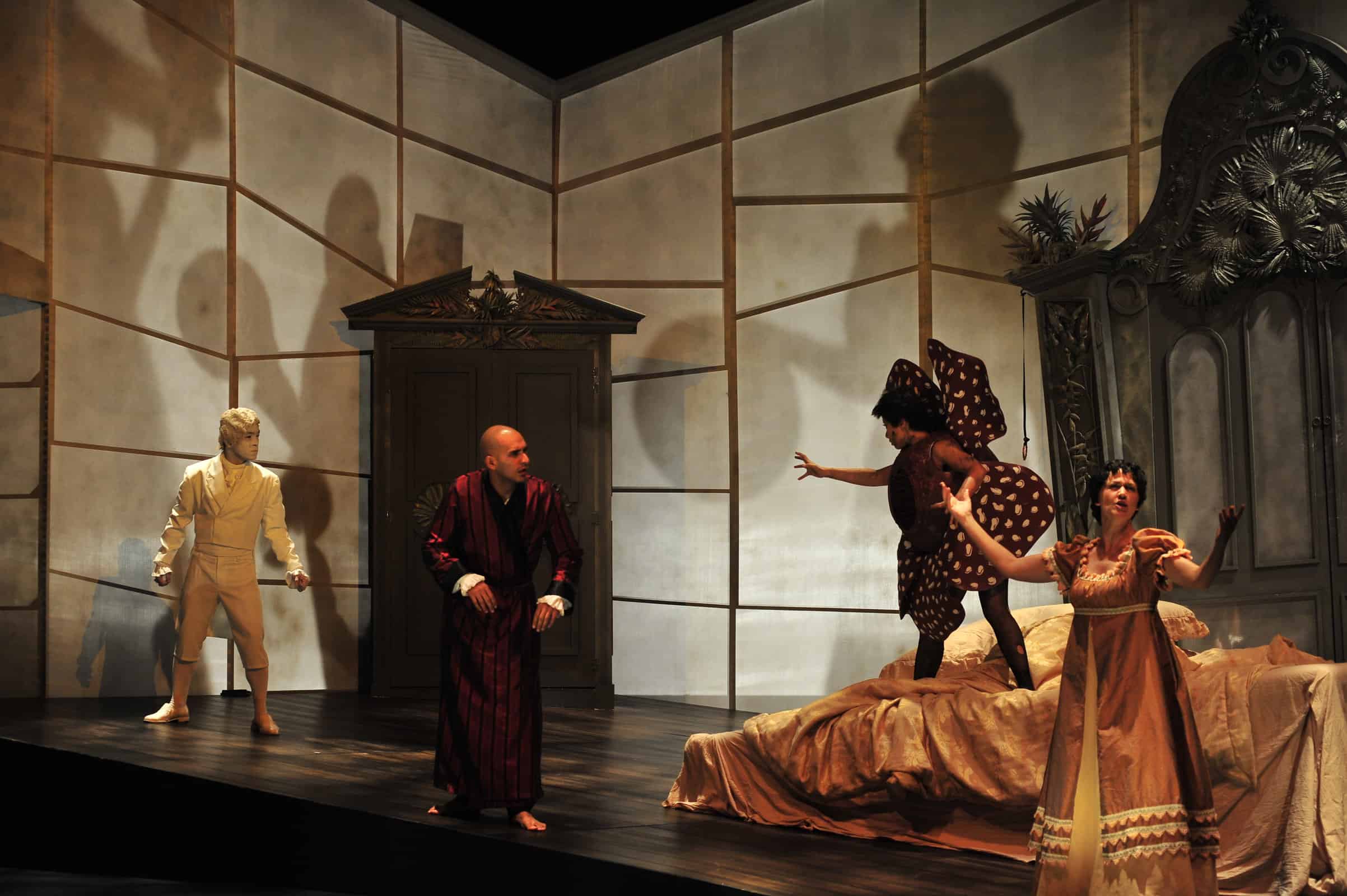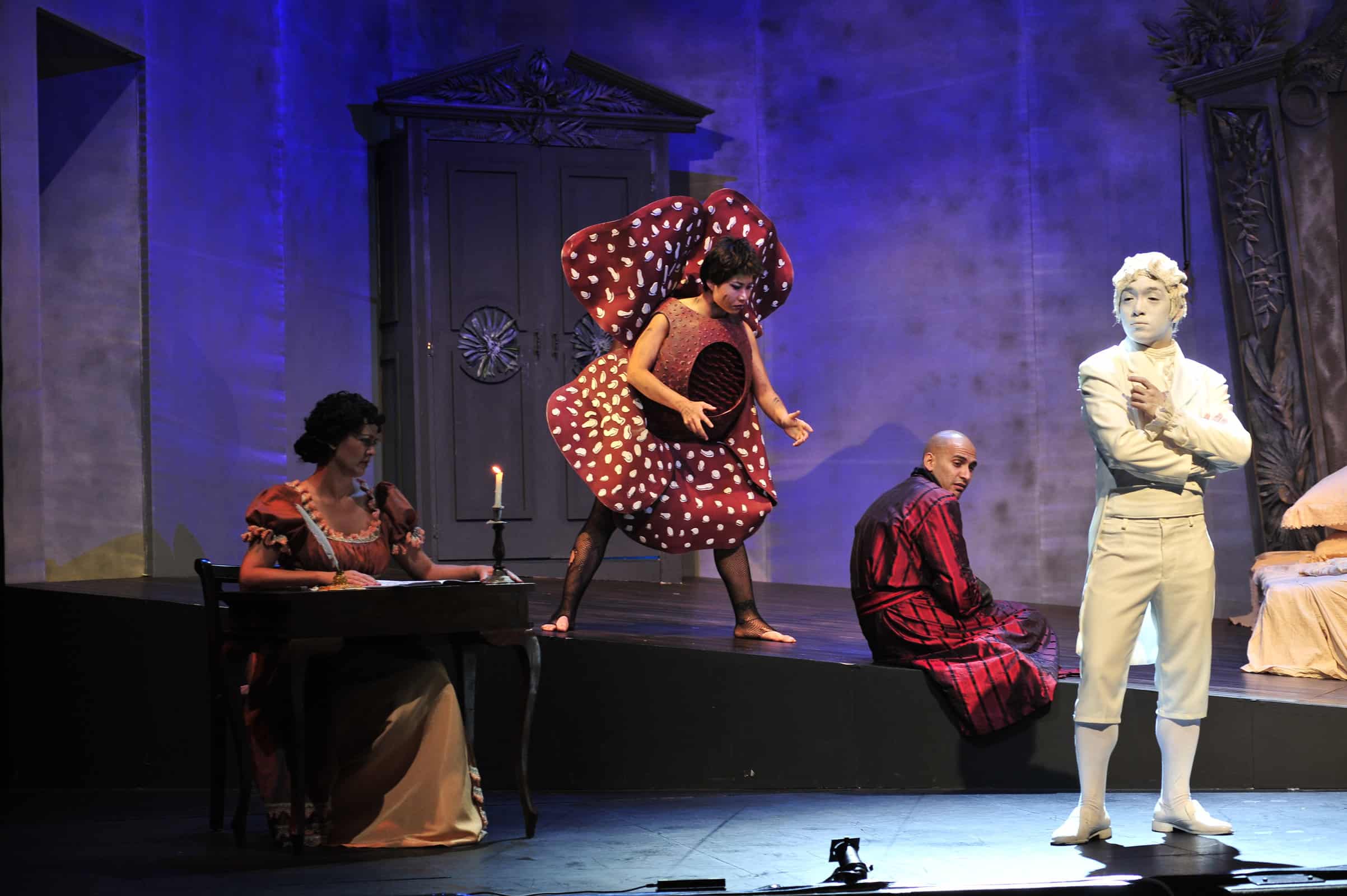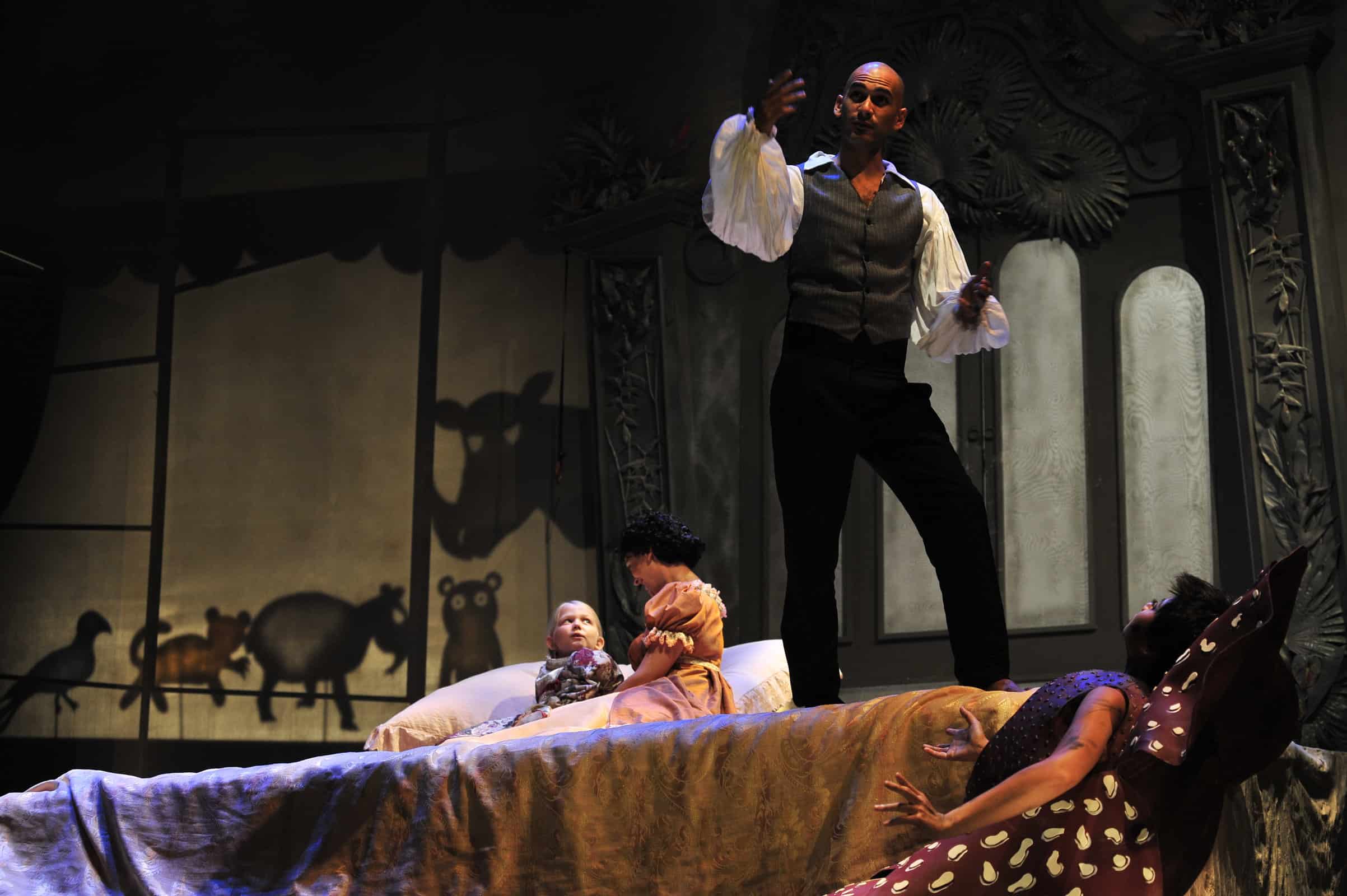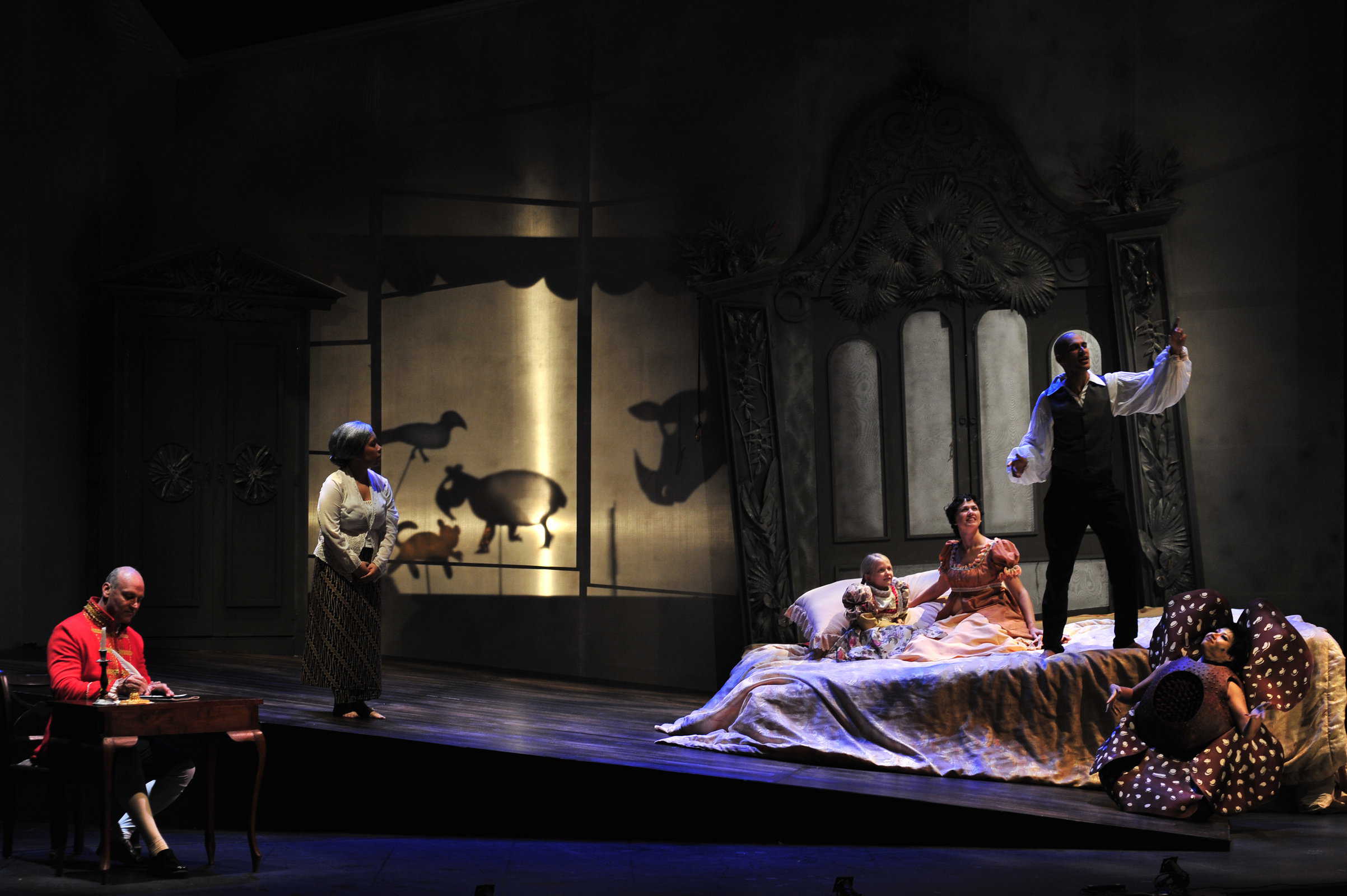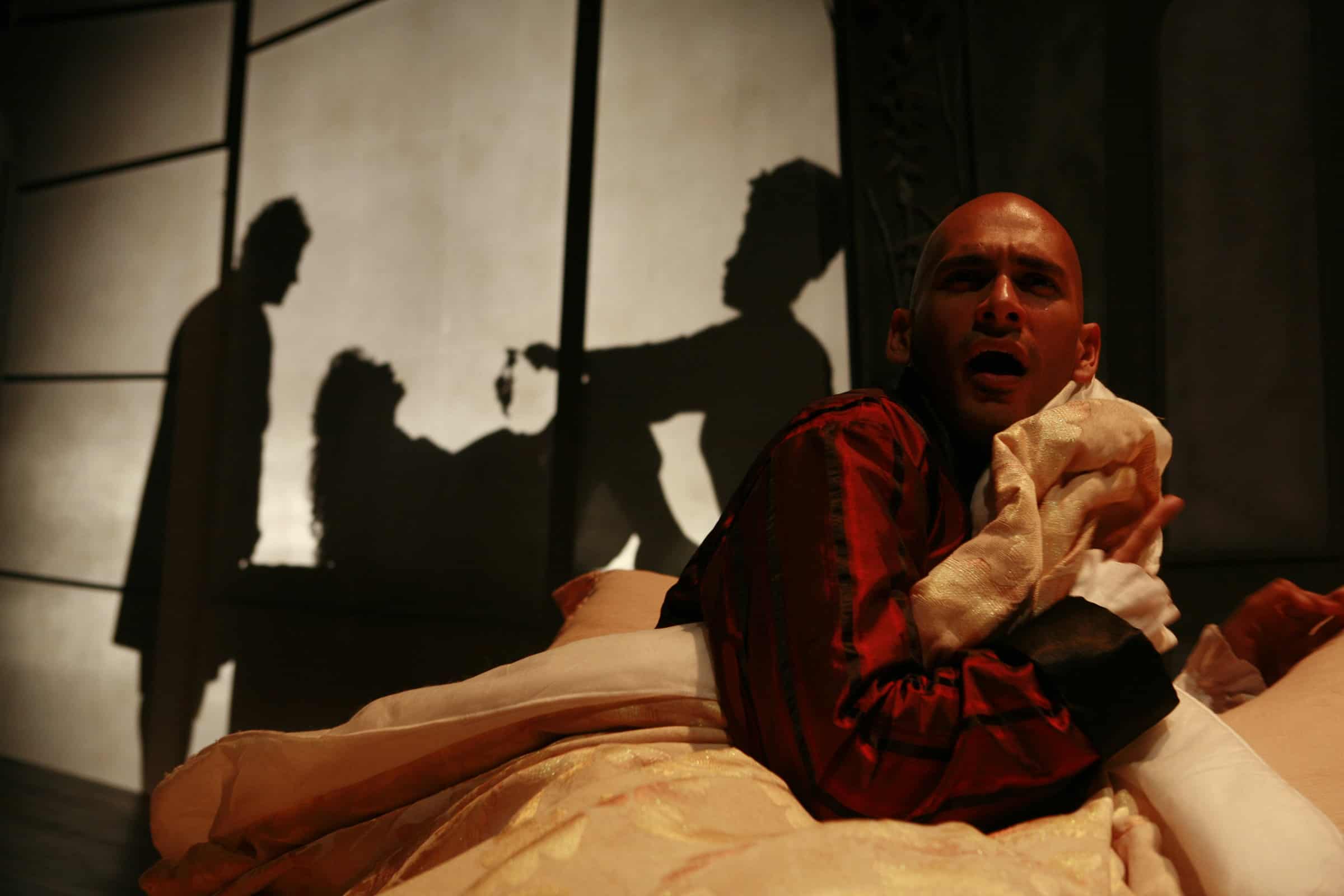




1826. Sir Stamford Raffles lies on his deathbed, delirious with dreams and hallucinations, whilst his wife Sophia frantically records his biography. A giant Rafflesia blossom invades his bedroom; he meets his deceased first wife Olivia, and encounters a talking statue who bears prophecies of greatness.
As his life flashes before him, we witness his birth at sea, his early voyages, his triumphant founding of Singapore, and his eventual tragic downfall – with his children dead of tropical diseases, his research destroyed in a burning ship, and himself bankrupted and diagnosed with syphilis.
About OCBC Singapore Theatre Festival 08
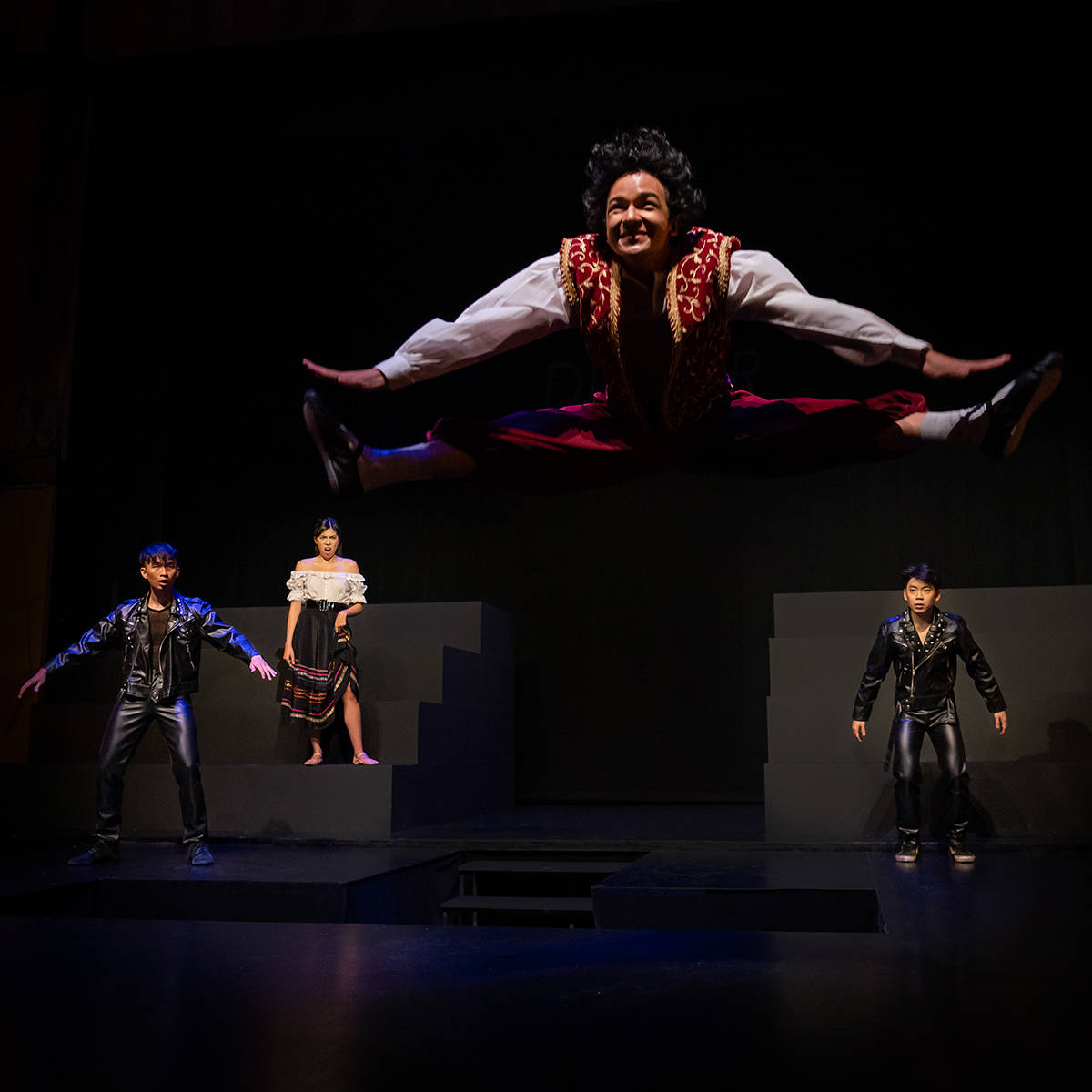
W!LD RICE’s biennial festival dedicated to the development and staging of new Singapore plays featured 14 new plays by 6 theatre companies over the course of 3 weeks.
From bold, funny and irreverent, to whimsical, thought provoking and beautiful; from the intimate and personal, to the epic and fantastic; these plays represented the ideas of a generation of theatre artists reflecting on the problems and possibilities of our times.
By re-examining our history and legends, tackling urgent issues and musing about what the future might hold, the plays offered imaginative and critical perspectives.
Three themes stood out in this 2008 festival. The first was multiculturalism. In The Swordfish, then the Concubine, a multiracial Singaporean cast performed episodes from the Malay Annals, interpreted by a Chinese Malaysian playwright, revealing how a pre-colonial past was very much a vital part of our nation’s heritage. In angel-ism, we witnessed a collaboration between a Chinese-language and a Malay-language theatre company, arguably the first of its kind in recent years.
Another theme was that of history and memory. The Last Temptation of Stamford Raffles was an ambitious, iconoclastic treatment of the life of Singapore’s official founder, whereas I Am Queen provided us with a daring glimpse of turbulent pre-Independence Singapore and Malaya through the eyes of an exotic dancer. Tree Duet and House Of Memory offered a contemplative account of the fragility of memories in a city of forgetting.
A final theme was that of the future. The works of some first-time playwrights. Apocalypse: LIVE! and the plays in Own Time Own Target hopefully triggered a wave of new Singaporean playwrights, tackling themes as diverse as armageddon and the army. The plays presented by Magdalena (Singapore) assured us that women’s voices will always be a crucial and invaluable aspect of our vibrant theatre scene.